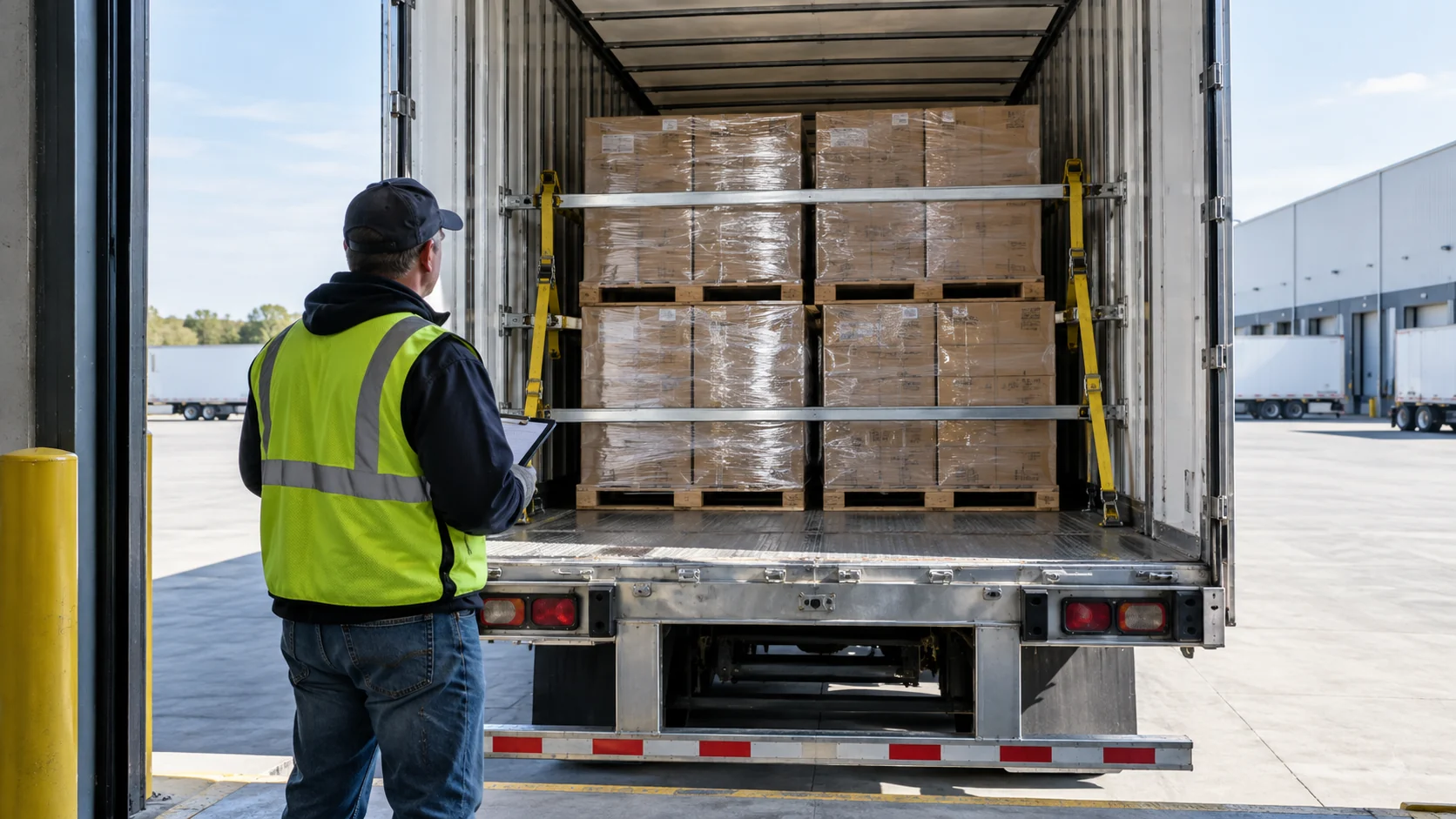
A closed dry-van trailer can make freight look protected, but the walls and doors do not automatically prevent cargo from moving. Hard braking, sharp steering, rough pavement, and changes in speed can cause pallets, cartons, drums, machinery, or loose pieces to slide, tip, or collapse. A shifted load may affect handling, damage freight, overload part of the trailer, or create a serious hazard when the doors are opened.
Preventing cargo movement begins before the trailer leaves the dock. The shipper, motor carrier, loader, and driver may have different roles, but the operating plan must result in freight that is properly distributed and secured. Drivers should follow current regulations, company procedures, and commodity-specific instructions for every load.
Understand What the Securement System Must Do
FMCSA's cargo securement rules are designed to prevent cargo from leaking, spilling, blowing, falling, or shifting enough to affect vehicle stability or maneuverability. Freight can be immobilized with suitable vehicle structures, dunnage, dunnage bags, shoring bars, tiedowns, or a combination of methods.
The correct method depends on the commodity and packaging. A tightly packed pallet load may rely on blocking, bracing, load bars, straps, and void fill. A heavy individual item may require rated tiedowns connected to suitable anchor points. Articles that can roll need chocks, wedges, cradles, or another method that prevents rolling. Commodity-specific rules take priority when they apply.
Review the Load Plan Before Loading
Ask for the shipment's total weight, pallet count, dimensions, stackability, and any special handling requirements. The plan should keep the vehicle within its legal gross and axle limits while maintaining a stable center of gravity. Concentrating heavy freight in one small area can overload the floor or an axle even when the total shipment weight appears acceptable.
Place heavier freight low and distribute it deliberately. Keep incompatible or crushable products separated. Do not stack a dense pallet on cartons that cannot support it. When several deliveries share one trailer, plan the stop sequence without sacrificing securement. Removing freight at the first stop must not leave the remaining cargo free to move.
Inspect the Trailer and Securement Equipment
Before loading, inspect the areas that will support or restrain the cargo. Look for floor damage, broken wall tracks, weak anchor points, water intrusion, debris, protruding nails, and damaged doors. A component used for securement must be in proper working order and strong enough for its intended function.
Check straps, chains, bars, decking, nets, and other devices for cuts, bends, cracks, missing parts, damaged hooks, or labels and markings required by company policy. Do not improvise with equipment of unknown capacity. A bar that fits between the walls may help contain a light pallet load, but it should not be treated as a universal replacement for the securement method required by the cargo.
Close Gaps With Blocking, Bracing, and Void Fill
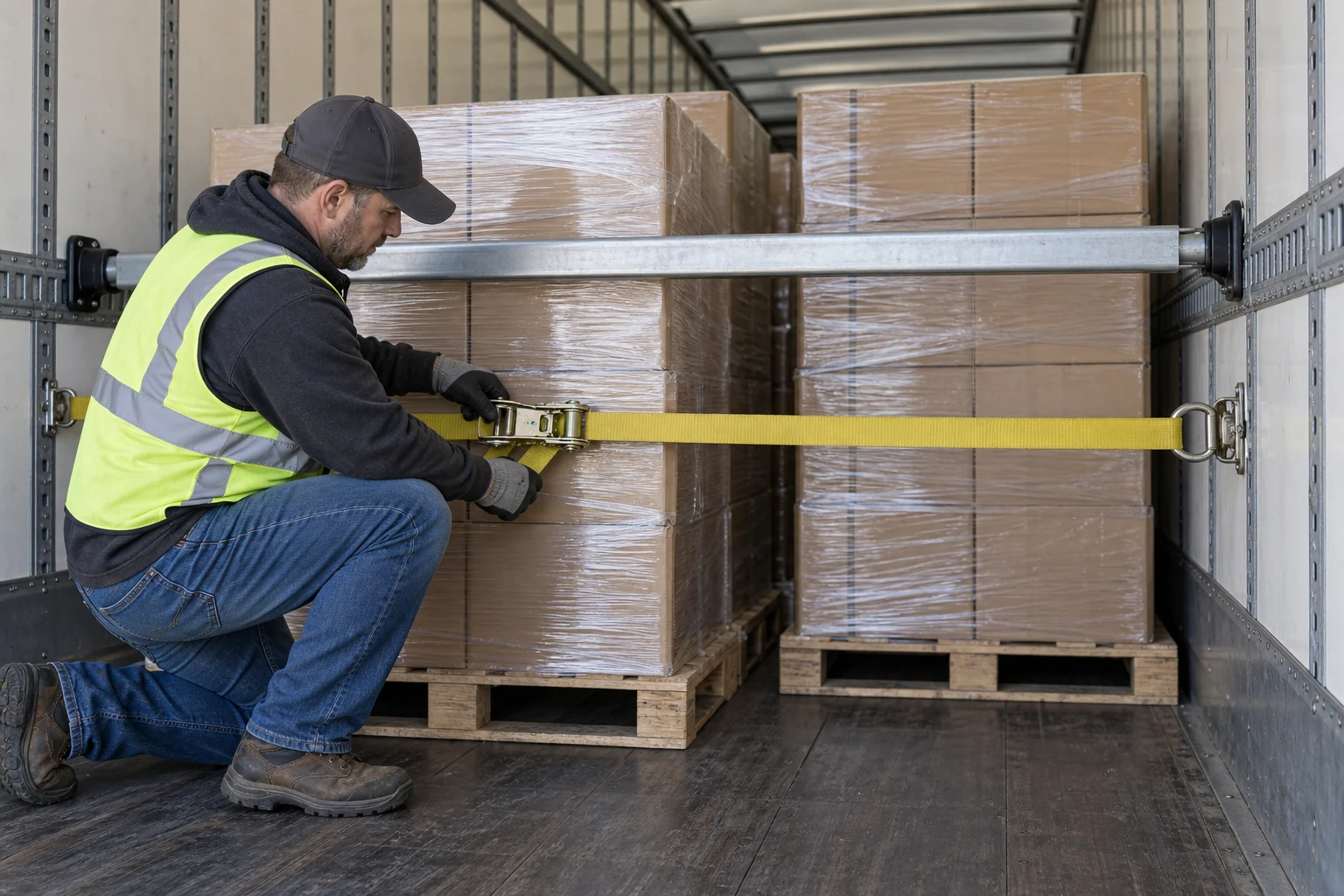
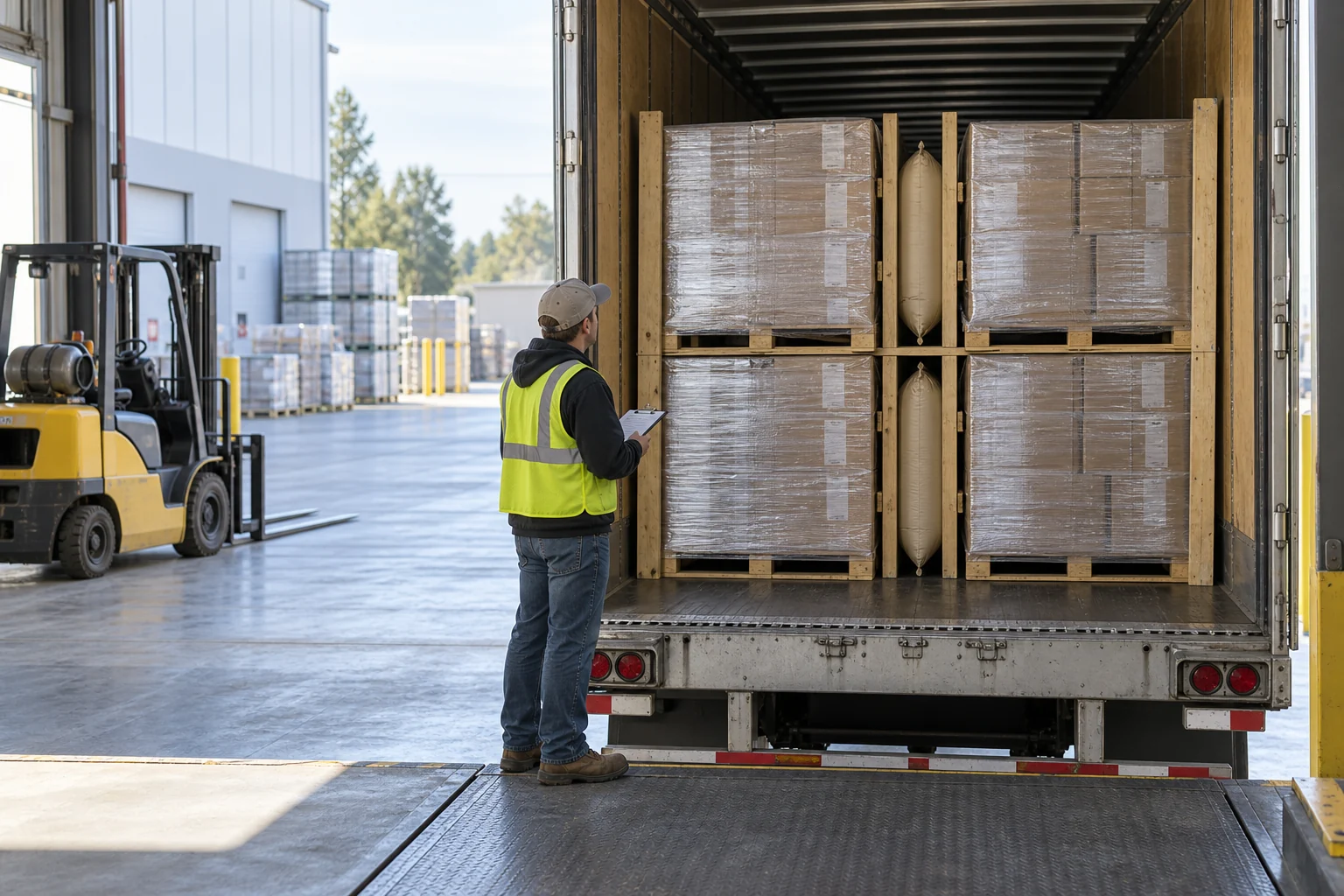
Open space gives cargo room to gain momentum. When pallets do not fill the trailer, use an approved method to control movement in the forward, rearward, and lateral directions. Blocking can transfer force into suitable parts of the trailer. Bracing can hold freight in position. Dunnage and inflatable bags can fill gaps between units when used within their rated applications.
Void fill should support the securement plan, not hide weak loading. A bag can fail if it is installed against a sharp edge, inflated incorrectly, or used across an opening it was not designed to span. Protect it from punctures and follow the manufacturer's instructions. Lumber, mats, or other dunnage must also be sound and placed so it cannot become loose cargo itself.
Use Tiedowns and Anchor Points Correctly
Tiedowns work as a system. Their working load limits, attachment method, direction, edge protection, and anchor points all matter. FMCSA rules include requirements for the aggregate working load limit and the number of tiedowns, with additional rules for certain commodities. Drivers and loaders should calculate the required system for the actual article rather than selecting straps by appearance.
Keep webbing away from sharp edges or use suitable edge protection. Attach hooks and fittings only where designed to bear the load. Remove twists that prevent a strap from sitting correctly, tension the device as intended, and secure loose ends. Do not use a damaged track or a trailer lining panel as an anchor point.
Check the Rear of the Load Before Closing the Doors
The last pallets near the doors deserve special attention. Rearward movement can press freight against the doors, creating a hazard for the person who opens them. Use suitable restraints to keep the final row in place, and confirm that bars or straps will not release unexpectedly when the door is opened.
Close and latch the doors only after checking the threshold, seals, hinges, and locking hardware. If there is any reason to suspect the load has shifted during transit, do not stand directly in the swing path. Open cautiously from a protected position and follow site and carrier procedures.
Inspect the Load During the Trip When Required
Under current federal rules, drivers of many property-carrying commercial vehicles must inspect cargo and securement within the first 50 miles after beginning a trip and then again when duty status changes, after three hours of driving, or after 150 miles, whichever comes first. Exceptions apply, including certain sealed or impracticably loaded vehicles. Drivers should consult the current text of 49 CFR 392.9 and their carrier's procedures for the load they are hauling.
During an inspection, look for loose straps, shifted pallets, leaning stacks, damaged packaging, or changes in trailer behavior. Listen for unexpected movement during low-speed turns or braking. If something feels wrong, stop at a safe location and investigate instead of continuing until the next scheduled break.
Treat a Sealed Trailer as a Special Case
A seal does not guarantee that the load is secure. It only shows that the door has been secured against ordinary opening. When a driver is instructed not to open a sealed trailer, or when the way it is loaded makes inspection impracticable, federal rules recognize exceptions to certain en-route inspection requirements. The carrier still needs a process for confirming load weight, loading method, seal number, paperwork, and any concerns reported by the shipper.
Drivers should not break a seal without authorization unless an emergency or lawful inspection requires it. If the trailer handles abnormally, communicate with dispatch and follow the carrier's safety procedure.
Dry-Van Cargo Securement Checklist
- Confirm cargo weight, dimensions, packaging, and stop sequence.
- Inspect the trailer floor, tracks, anchors, doors, and roof.
- Distribute weight with axle limits and stability in mind.
- Keep heavy freight low and protect crushable products.
- Remove or control gaps with approved blocking, bracing, or void fill.
- Use rated, undamaged securement devices and suitable anchor points.
- Protect straps from sharp edges and secure loose ends.
- Restrain the final row near the rear doors.
- Record seals and loading information accurately.
- Complete required en-route inspections and stop if handling changes.
Final Thoughts
A safe dry-van load is the result of a complete system: accurate weight information, thoughtful placement, strong equipment, controlled gaps, careful inspection, and clear communication. Taking time at the dock is far less costly than dealing with damaged freight or an unstable trailer on the highway.