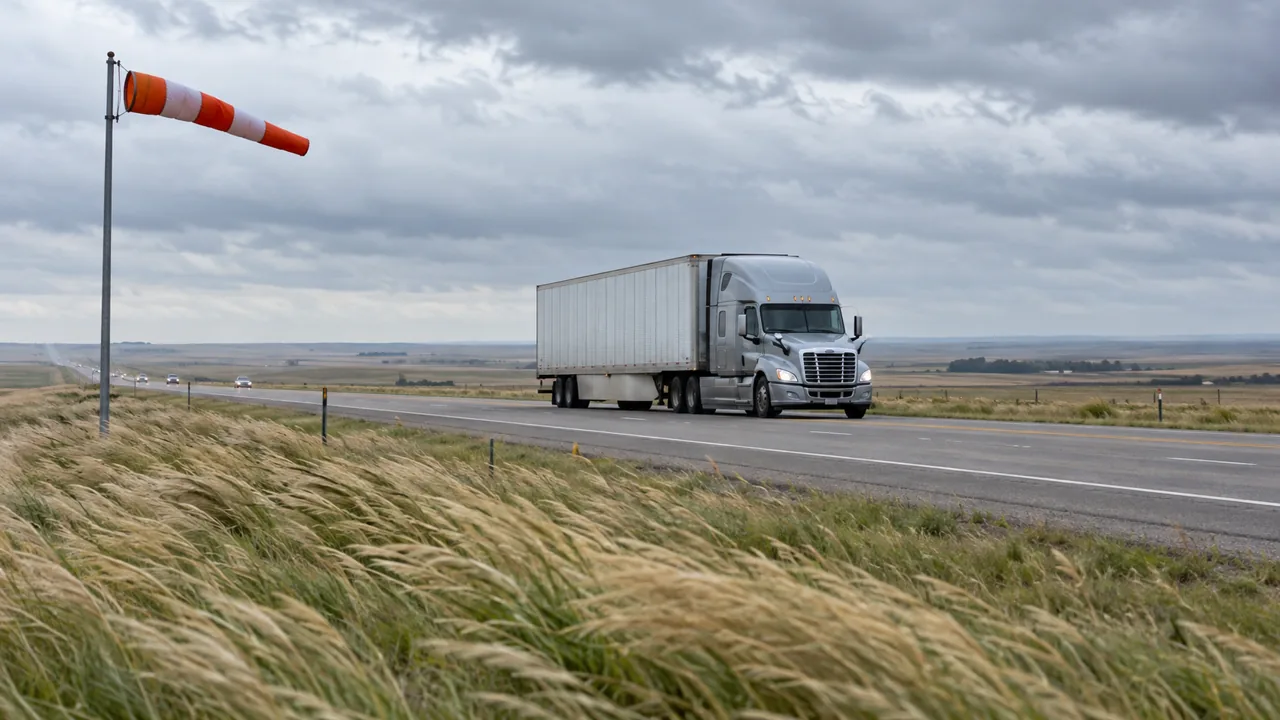
A crosswind can turn a familiar interstate into a different driving problem within a few miles. A sheltered stretch behind trees may feel calm, while the next bridge exposes the whole side of a trailer to a sudden gust. For truck drivers, the useful question is not whether the forecast sounds unpleasant. It is whether the combination of vehicle, load, road, visibility, and available stopping places still leaves a comfortable margin of control. A good wind plan begins before departure and includes a place to wait when conditions become unsuitable.
Read the forecast along the route
Looking at the weather beside the terminal is only a starting point. Check the forecast for exposed sections along the route, particularly plains, elevated highways, bridges, and approaches to mountain gaps. Compare the expected timing with the hours when you will reach those locations. A wind event that starts after you leave can be more relevant than the conditions visible through the windshield at dispatch. Keep an alternative stopping area in mind before entering a long section with few exits or limited truck parking.
The National Weather Service guidance for high-wind events explains the danger strong gusts pose to high-profile vehicles and advises drivers to slow down and keep both hands on the wheel. Turn that general guidance into a practical trip review: where is exposure greatest, when are gusts expected, and where can the truck leave the road safely? The forecast is one input. Road restrictions, actual handling, and your carrier's operating procedures also matter.
Road authorities may use specific restrictions for exposed corridors. WYDOT's explanation of weight-based wind closures illustrates why a driver must check the restriction applicable to the actual combination rather than rely on a general forecast alone. Use the current road notice for the trip.
Consider the vehicle you are actually driving
An empty dry van and a heavily loaded trailer do not respond identically, but weight alone cannot establish that a trip is safe. Trailer shape, load distribution, suspension condition, road surface, speed, and wind direction all affect the situation. A broad trailer side presents a large surface to a crosswind. Gusts can also reach the vehicle differently as it passes a barrier, emerges from a cutting, or moves alongside another large vehicle. Avoid borrowing another driver's conclusion without understanding those differences.
There is no single wind speed in this article that authorizes every truck to continue. Use the limits and shutdown procedures applicable to your equipment and operation, and obey restrictions issued by the road authority. If an alert applies to light or high-profile vehicles, do not assume your configuration is exempt because it feels stable on a sheltered approach. Ask dispatch for clarification while parked if the restriction is unclear. A conservative decision made before the exposed section is easier to manage than a late reaction inside it.
Build room for changes in handling
Wind does not always arrive as a steady sideways push. The more difficult moments may involve a short gust followed by a sudden release. That changing force can tempt a driver into excessive correction. Keep attention well ahead, maintain a secure steering grip, and avoid abrupt inputs. Reduce speed in a controlled way when conditions require it, while remaining aware of surrounding traffic. If you need increasingly large corrections simply to maintain the lane, the remaining margin is becoming too small.
Give neighboring vehicles enough space to react to their own wind exposure. A trailer beside you may move unexpectedly, and a small car may be difficult to track in spray or blowing dust. Passing another high-profile vehicle adds changing airflow and reduces available room. Do not let the desire to finish a pass dictate the rest of the trip. Look for opportunities to restore a stable gap and avoid remaining beside another truck longer than necessary. A safe arrival matters more than maintaining the original cruising pace.
Recognize sections that deserve another decision
Bridge approaches, open embankments, and the end of a line of buildings are useful reminders to reassess conditions. Look for moving debris, bending vegetation, changing spray patterns, and variable-message signs, but do not treat roadside clues as precise measuring instruments. They help explain what the truck is experiencing; they do not replace official restrictions or a forecast. When visibility also deteriorates, the problem becomes more complex because stopping space and lane position become harder to judge.
A reroute needs the same scrutiny as the original road. A smaller highway might have more shelter, or it might introduce narrow bridges, difficult turns, weak communications coverage, and fewer safe parking options. Review suitability for the full vehicle before accepting an alternative. Confirm where the route rejoins the planned corridor and what additional time it requires. A suggestion from a passenger navigation app is not enough evidence that a detour accommodates a commercial combination.
Choose a stopping place before you need one
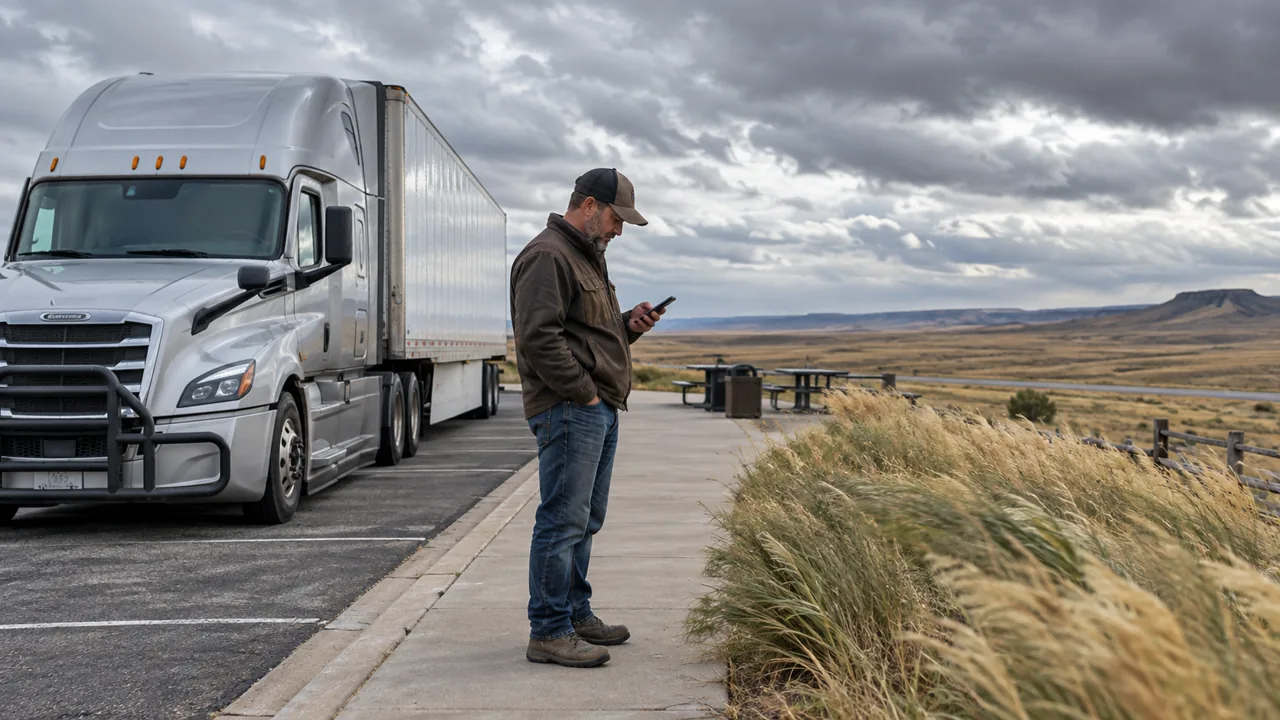
The best shutdown location is a legal place reached while the truck is still controllable, with enough room for safe entry and later departure. A truck stop, rest area, terminal, or another approved parking facility is generally a better planning target than the highway shoulder. Check access carefully, including whether an exposed entrance or crowded lot creates a separate problem. Avoid parking close to damaged trees, loose signs, or objects that strong wind could move toward the vehicle.
Waiting beneath an overpass or on a narrow shoulder can introduce traffic and debris hazards rather than solve the original problem. If conditions become an immediate emergency, prioritize control and contact the appropriate emergency assistance. For an ordinary weather shutdown, communicate before parking becomes urgent. Send dispatch your location, the restriction or handling concern, and the next time you expect to review conditions. Describe what you observe instead of simply saying that the weather is bad.
Make the delay understandable
A useful update separates the weather decision from the delivery discussion. For example, explain that gusts are affecting lane control on the next exposed section, identify your safe stopping location, and request a revised appointment plan. Keep any relevant road-authority notice or weather advisory with the trip record. This gives the next dispatcher enough context to continue the conversation without pressuring the driver to repeat the whole assessment. It also helps the receiver distinguish an active safety decision from an unexplained late arrival.
Do not promise a restart time based only on a single forecast screenshot. Conditions may improve unevenly, and a road can remain restricted after the wind near the parking area settles. Agree on a review time rather than a guaranteed departure time. Use the pause to rest, organize the next stage of the trip, and confirm that the route remains open. Repeatedly checking an app every minute rarely adds useful information and can make a necessary wait feel more rushed than it is.
Restart with a fresh plan
Before moving again, review current road information and the forecast for the next exposed section. Walk around the vehicle where it is safe to do so and look for wind-blown debris, disturbed equipment, or damage around the parking area. Secure loose belongings before opening cab or trailer doors in gusty conditions. Confirm the revised schedule and make sure the delay has not created a different problem with available driving time or the ability to find parking later.
Treat the first miles as a new assessment rather than proof that the entire weather event is over. Remain ready to stop again if the truck's handling or the official restrictions require it. The aim is a repeatable process: check exposure, understand the equipment, leave room for changing conditions, and decide early where to wait. That process is more reliable than a personal wind-speed rule or a promise to keep going because another truck has just passed.