
A roadworks notice can look straightforward on a small screen: a road name, a date and a colored line on a map. For a truck driver, the useful information sits in the relationship between those details. Does the notice cover the direction being traveled? Will the restriction apply at the expected arrival time? Does the signed diversion accommodate the actual vehicle? Reading the notice before departure gives dispatch time to resolve those questions and arrange a route the driver can use.
Identify the road and direction precisely
Start with the road number, junctions and direction named by the authority. Local names can describe several sections of the same corridor. A closure on an adjacent ramp may have little effect on the planned route, while a restriction on the final exit can change the entire approach to the receiver.
Compare the notice with the carrier's approved route information. Write down the affected segment in a way another dispatcher can recognize. If the route passes through the area in both directions during one day, check each movement separately. The return journey may use a different ramp or fall under a different phase of the work.
Read the dates as an operating window
A project may last months while an individual closure lasts only part of one night. Look for the specific period relevant to the journey and note the local date. An overnight restriction can cross midnight, so a casual reference to Tuesday night may be less useful than the authority's exact start and end information.
Keep the time of your check with the trip plan. Weather, project progress or an incident can change the announced arrangement. Before entering the affected area, consult the current official information at a suitable stop. A saved screenshot is a useful record of what was known earlier, but it should not silently become the latest update.
Examine the diversion as a truck route
A diversion describes how traffic is redirected. It still needs to be assessed for the vehicle and load involved. Use the carrier's routing process to check relevant restrictions, dimensions and access. Do not assume that a consumer navigation application has considered the same information simply because it offers a shorter route around the closure.
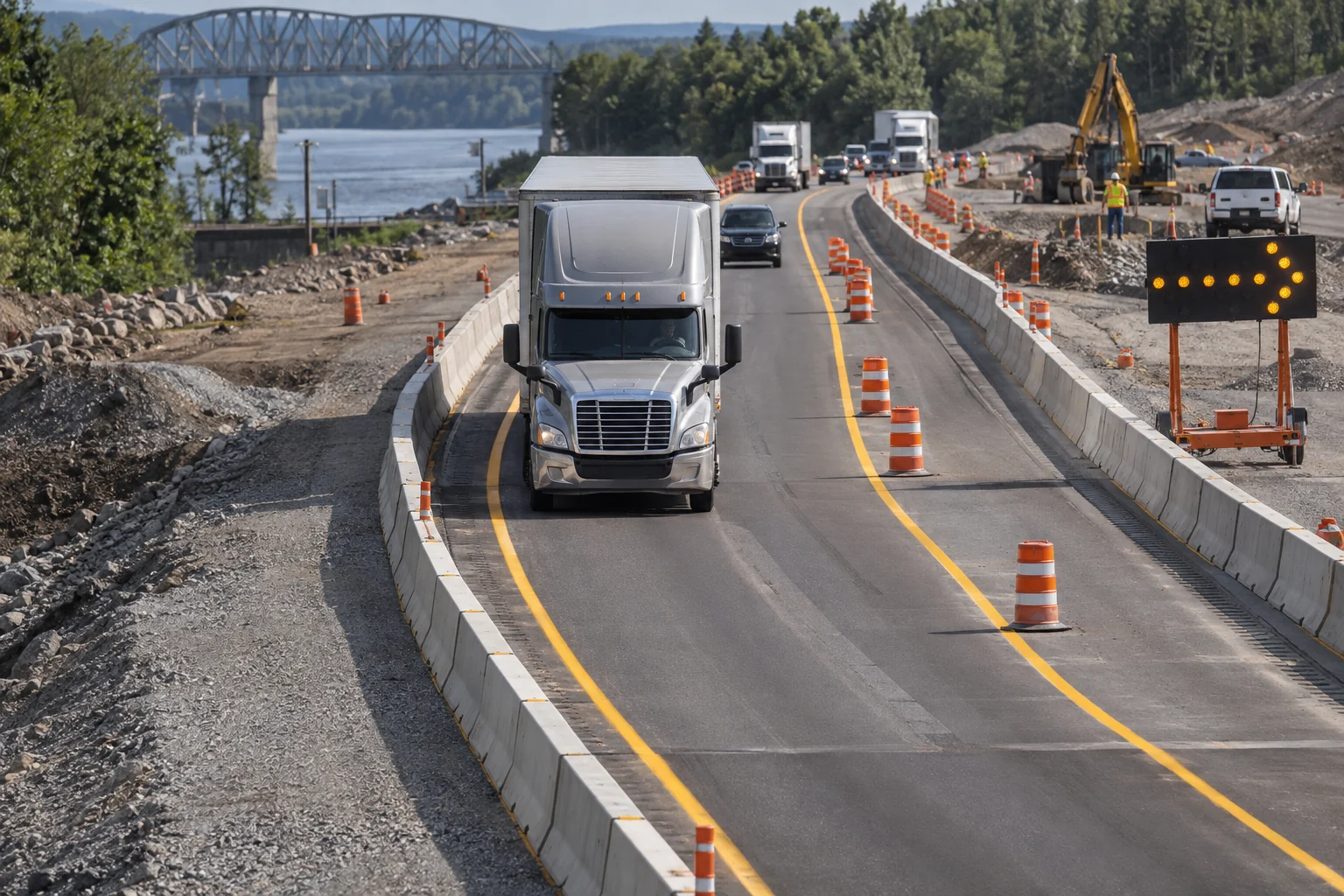
The Federal Highway Administration work-zone resources provide background on work-zone operations. For a particular trip, the state or local road authority's current notice is the more immediate source. Keep the official notice and the carrier's confirmed route together so the driver can see which information supports the instruction.
Check the delivery entrance separately
Even when through traffic remains open, the usual turn into a warehouse may be unavailable. Ask the receiver whether construction affects its commercial entrance. A business can remain open while access for a large combination is temporarily moved to another street. Confirm the designated receiving point through the established contact.
Imagine a site beside a resurfacing project. The road is open westbound, but the receiver's normal entrance is approached from the closed eastbound side. The trip needs an approved final approach, not just permission to travel through the general area. Resolving that detail before departure can prevent an unnecessary arrival at the wrong side of the building.
Allow for uncertainty in the schedule
The office can plan an expected delay without promising that every vehicle will pass through the works in the same time. Keep the estimate distinct from a confirmed receiving commitment. If the original appointment becomes unrealistic, contact the receiver through the normal booking process and record the revised arrangement.
A helpful dispatch message states the affected segment, the current route decision and the next point for an update. It does not need to forward every project bulletin. The driver can keep the full reference available while the action line remains short enough to understand during a parked check of the trip.
Prepare the cab before reaching the works

Set navigation and review instructions while parked. Keep the display positioned and configured under the carrier's policy. A complicated diversion is a poor time to search a phone for the original message or compare several map screenshots. If the route becomes unclear, use an appropriate stopping opportunity and contact dispatch.
FMCSA's Large Trucks and Buses Safety pages offer useful context for sharing constrained road space. The specific maneuvering and driving decisions remain governed by the conditions, traffic control and the driver's training. An advance route plan supports those decisions by reducing avoidable uncertainty.
Keep a note that can be updated
After a completed trip, record what helped and what required clarification. Perhaps the notice named an unfamiliar junction, or the receiver used an old entrance description. Add the confirmed clarification to the carrier's location record with a date. Mark temporary details so they can be reviewed when the project phase changes.
For the next journey, begin again with the official notice rather than treating a previous successful passage as permanent permission. A work zone is a changing operating environment. The best preparation combines precise location information, a vehicle-appropriate route, a confirmed delivery approach and a schedule that can respond to the current arrangement.
## Keep the official notice easy to retrieve
Save the notice's title, responsible authority and current link with the trip record. A cropped map can remove the legend or direction label that explains the restriction. If a screenshot is used for convenience, retain enough context to find the original notice again while parked. When dispatch sends a revised route, identify the version the driver should use. Keep the old plan in the history where appropriate, while making its replacement unmistakable in the working packet. That prevents an earlier attachment from becoming the apparent instruction simply because it opens first on the device.