
A breakdown in a semi-truck rarely arrives at a convenient moment. A tire can lose air on an interstate, an engine warning can appear on a rural grade, or an electrical fault can shut down a tractor in heavy traffic. The first objective is not to diagnose the part. It is to keep the truck, its driver, and everyone approaching the scene out of a second incident.
The response should be simple enough to remember under pressure: control the vehicle, stop in the safest reachable place, make the stopped truck visible, notify the right people, and let a qualified technician decide what can be repaired. Conditions differ by road, load, weather, and jurisdiction, so carrier policy and the instructions of emergency responders always matter.
Recognize the Problem Without Making It Worse
A sudden loss of power, low air-pressure alarm, unusual vibration, overheating indication, burning smell, or tire failure calls for a controlled response. Keep both hands on the wheel, signal your intention, and avoid abrupt steering or braking. If the truck can still move safely, use the remaining momentum to reach an exit, rest area, wide shoulder, or another protected place. Do not pass a suitable refuge merely to get closer to a planned delivery.
The meaning of a warning light depends on the truck and the fault. A driver should use the vehicle manual and carrier procedure rather than guessing. A suspected brake, steering, wheel-end, or low-air problem may make continued travel unsafe even if the engine will run. FMCSA's summary of 49 CFR Part 396 explains the general prohibition on operating a commercial vehicle in a condition likely to cause an accident or breakdown. When in doubt, stop and consult maintenance.
Choose the Safest Stopping Position Available
Pull as far from moving traffic as the surface and the vehicle permit. Leave room for a service truck to reach the tractor or trailer without working in a live lane. Avoid stopping just beyond a blind curve or crest when there is a safer option ahead. On a narrow shoulder, soft ground, bridge, tunnel approach, or construction zone, the apparently obvious stopping place may still put the truck and responders at risk.
If the vehicle cannot clear a travel lane, treat the situation as an active roadway hazard and contact emergency services immediately. Do not try to push or drive a disabled truck through traffic with a serious mechanical problem. Use the parking brake when appropriate, shut down the engine if the fault demands it, and assess the surroundings before opening a door. A safe path of travel outside the cab may be very different from the view through a mirror.
The FHWA guidance for service patrols emphasizes the risks faced by occupants of disabled vehicles on high-speed roads. That principle applies to a large truck as much as to a car: reduce time exposed to moving traffic and request a prompt response.
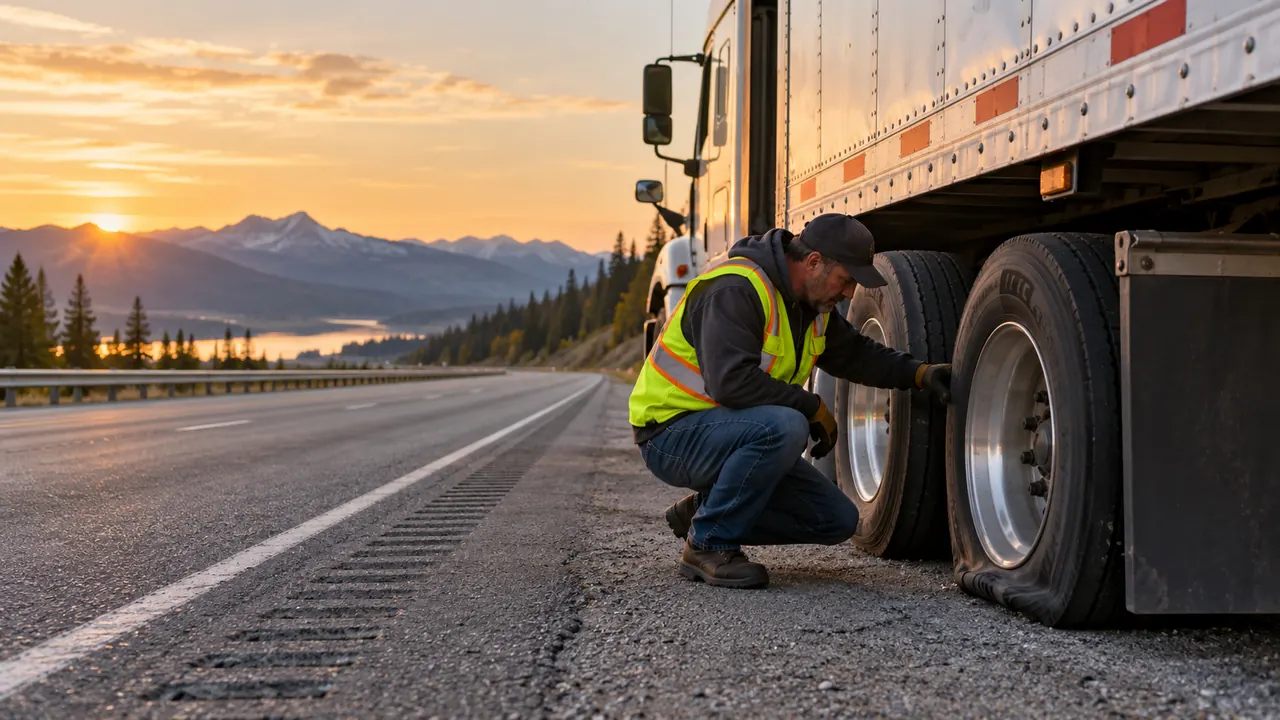
Make the Truck Visible and Follow Current Warning Rules
Activate hazard flashers as soon as the truck is stopped. Federal rules normally require warning devices for a commercial vehicle stopped on a highway or shoulder for a reason other than a necessary traffic stop, with placement requirements that vary by road layout. The FMCSA emergency-warning guide describes the standard procedure, including a ten-minute placement window. Curves, hills, and divided highways have special patterns; drivers should not assume that the familiar straight-road triangle positions fit every scene.
Rules can change. As of this article's date, FMCSA has published a conditional warning-device waiver for qualifying equipment, effective through October 9, 2026. A driver should follow the current regulation, any applicable waiver conditions, and carrier instructions. A waiver for particular equipment is not a general reason to leave an ordinary stopped truck unmarked.
Plan the walk before leaving the cab. Wear high-visibility clothing if available, use the protected side of the vehicle when possible, and never step into a traffic lane to place a device. If the shoulder is too dangerous to walk or traffic is passing inches away, tell dispatch and emergency services that traffic control is needed. The rule exists to make the scene safer; it does not make an unsafe walk safe.
Give Dispatch and Roadside Assistance Useful Details
Call your carrier's breakdown line or dispatcher once the scene is stable. A precise location saves time: highway number, travel direction, mile marker, nearest exit, cross street, or GPS coordinates. Say whether the truck is fully on the shoulder, partly in a lane, or in a place with poor visibility. Mention smoke, fire, leaking fuel, a hazardous-material load, injured people, or any immediate traffic danger. Those details determine whether police, fire crews, a heavy-duty tow, or specialized recovery is needed.
Describe the symptoms without claiming a diagnosis you cannot verify. “Low-air warning sounded and pressure kept falling” is more useful than “the compressor is definitely broken.” Report the tractor and trailer numbers, load status, tire position if relevant, fault codes shown on the display, and whether the engine can run. Send photographs only from a safe location. Do not crawl beneath a vehicle on a shoulder or touch a hot wheel end to improve a report.
Keep your phone charged and available. A driver may need to answer a mechanic's questions, confirm a service-truck location, contact a shipper about a delay, or coordinate a safe transfer of time-sensitive freight. If connectivity is poor, note the last confirmed location and make a second call when possible rather than assuming the first message reached the team.
Stay Safe While Help Is on the Way
There is no universal rule to remain in or leave the cab in every breakdown. The answer depends on whether the truck is clear of traffic, whether there is fire or smoke, the shoulder width, visibility, terrain, and instructions from responders. If remaining inside presents a serious danger, move to a protected place away from the road when it is safe to do so. If exiting would expose you to live traffic, wait for traffic control and follow instructions from emergency personnel.
Avoid standing between the tractor and trailer, directly ahead of the truck, or beside the traffic-facing wheels. Do not invite a passenger or bystander to help with a roadside repair. Keep the load secure, lock the cab when appropriate, and stay aware of approaching vehicles and weather. On a hot or cold day, tell dispatch if waiting outside creates a health risk so assistance can be prioritized.
Drivers passing a stopped truck also have responsibilities. The FHWA overview of Move Over policies explains how state laws create a buffer for responders and stranded motorists. Requirements vary by state, but the practical lesson is consistent: slow down, move over when safe and lawful, and leave working room for people on the shoulder.
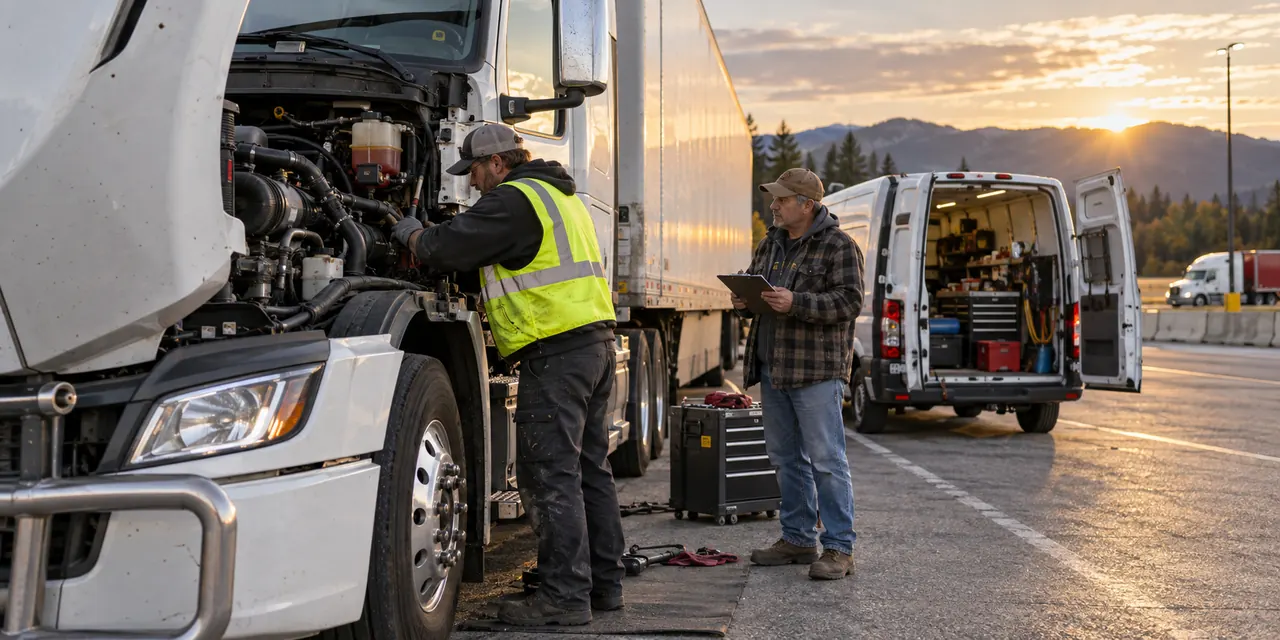
Do Not Turn a Small Fault Into a Larger Failure
Some faults look easy to fix from the driver's seat. A loose electrical connector, cooling-system leak, or tire issue may still hide a more serious defect. Follow your carrier's authorization process before arranging repair, moving freight, or accepting a tow. A qualified technician can determine whether the truck can be made roadworthy on site, needs a service facility, or should be recovered by a heavy-duty tow operator.
Never bypass a safety system to keep the trip moving. Do not continue with a tire whose condition is uncertain, a wheel end that is excessively hot, or a brake problem that has not been properly evaluated. Even if the truck restarts, the original fault may remain. The safest outcome is a documented repair and a vehicle that can pass a deliberate inspection before rejoining traffic.
Check the trailer and cargo after a hard stop or tow. A shifted load, damaged seal, leaking reefer, or disconnected airline can create a second problem. If a load is sensitive to temperature or a delivery appointment, tell the carrier and customer promptly. Clear communication can protect the freight without pressuring a driver to operate an unsafe vehicle.
Record the Event and Inspect Before Departure
When the repair is complete, collect the service documentation: the observed fault, work performed, parts replaced, and any restrictions on further travel. Inspect the vehicle yourself before departing. Look for tools or debris left near the truck, properly secured panels, safe tire condition, intact lines, normal air-pressure build, and warning lamps that behave as expected. Move back into traffic only when the merge can be completed safely.
Report defects according to carrier policy and applicable inspection requirements. The FMCSA maintenance planner explains driver vehicle inspection reports and the need to document defects that could affect safe operation or lead to mechanical breakdown. Accurate notes help maintenance teams find repeat problems instead of treating every roadside call as an isolated event.
A Short Breakdown Checklist
- Control the truck and reach the safest stopping area available.
- Activate hazard flashers and assess traffic, weather, and the vehicle's position.
- Use warning devices as required by current rules and only when placement can be done safely.
- Call emergency services for a blocked lane, fire, spill, injury, or immediate traffic danger.
- Give dispatch precise location, symptoms, vehicle details, and load information.
- Stay clear of passing traffic while waiting for qualified assistance.
- Document repair, inspect the tractor and trailer, and resume only when roadworthy.
A breakdown can disrupt the schedule, but a rushed response can endanger a life. A calm stop, clear warning, accurate call, and careful return-to-service check are the steps that make the delay manageable.